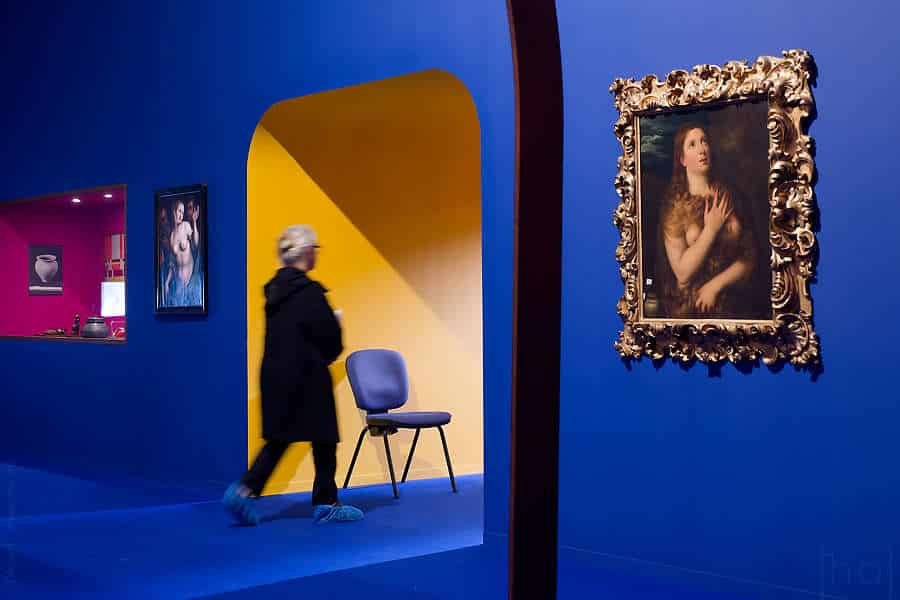
Biennale d’art contemporain 2026 – Lyon, France
What to expect in 2026
Biennale d’art contemporain 2026 – Lyon, France is the 18th edition of the Lyon Biennale of Contemporary Art. The exhibition is directed artistically by Isabelle Bertolotti and curated by Catherine Nichols, with the main project titled “Passer d’un rêve à l’autre / To pass from one dream to another.” The curatorial concept takes inspiration from Lyon’s traboules and uses ideas of passage, circulation, exchange, imagination and collective life to connect contemporary art with the city.
The exhibition approaches the idea of economy in a broad sense. Rather than focusing only on money or financial systems, the project considers how people, communities and environments exchange resources, attention, care, ideas and experiences. The artistic project draws on the writings of Walter Benjamin and the work of Robert Filliou, particularly his concept of a “poetic economy.”
The Biennale brings contemporary art into different architectural and urban environments throughout Lyon. Major exhibition sites include Les Grandes Locos, macLYON and the Musée des Tissus et des Arts décoratifs, while other works are presented in museums, gardens, historic passageways, foundations, public spaces and transport locations.
Enjoy Your Event Stress-Free with France Travelo
Planning a trip around a festival, concert, cultural celebration, or business event in France can be time-consuming—finding tickets, accommodation, transport, and local information takes effort. FranceTravelo makes it easier by bringing the essential information and travel support together in one place.
The programme features artists from many different geographical backgrounds and generations. The official artist list includes established international figures alongside emerging practitioners, with the edition particularly opening its programme to artists connected with Australia, New Zealand and Pacific contexts.
Event dates
September 19 – December 13, 2026
The 18th Lyon Biennale of Contemporary Art is scheduled to run across this period. The official website confirms the exhibition dates and visitor opening arrangements.
The main exhibition is open Tuesday to Friday from 11am to 6pm and Saturday and Sunday from 10am to 7pm, with Mondays closed. The official programme also specifies extended opening arrangements during the autumn school holiday period.
Visiting this event? Don’t miss out on these amazing activities and local experiences while you’re here.
Venue & exhibition site
The 2026 Biennale is deliberately distributed across multiple sites rather than being presented inside one conventional exhibition centre. This creates a city-wide exhibition route connecting contemporary art with Lyon’s architecture, industrial history, museums and public spaces.
The principal venues include:
- Les Grandes Locos – a former railway and industrial complex transformed into a cultural venue.
- macLYON – Musée d’art contemporain – Lyon’s museum of contemporary art at the Cité Internationale.
- Musée des Tissus et des Arts décoratifs – a historic museum setting connected with Lyon’s textile heritage.
- IAC – Institut d’art contemporain / Frac Rhône-Alpes in Villeurbanne.
- Traboules des pentes de la Croix-Rousse – historic passageways incorporated into the artistic route.
- Jardin du Musée des Beaux-Arts – a historic sculpture garden containing contemporary interventions.
- Musée des Confluences – where selected works are presented in the museum’s Crystal entrance area.
- Fondation Bullukian – a contemporary art foundation in central Lyon.
- Parking LPA Saint-Antoine – an unusual urban location incorporated into the exhibition.
- Station métro B – Gare Part-Dieu – a public transport environment used for an artwork.
- Cour des Loges – a Renaissance heritage setting used for a contemporary installation.
Full exhibition programme
The central exhibition, “To pass from one dream to another,” connects artworks through a thematic exploration of economy, exchange, relationships and collective imagination. The Biennale describes the exhibition as a passage through different ways of experiencing the city and contemporary art.
The principal venues approach the project from different perspectives. Les Grandes Locos focuses strongly on industrial histories and the material dimensions of economic activity. The Musée des Tissus et des Arts décoratifs provides a setting for relational questions, while macLYON explores more existential dimensions of the project.
A particularly distinctive feature is “La Fête Permanente,” a convivial space developed around Robert Filliou’s ideas. These spaces use movable furniture and informal settings to encourage visitors to sit, meet, talk and participate. They can host conversations, performances, radio broadcasts and video projects.
The exhibition route is not intended to require one fixed order. Visitors can move between locations according to their interests while still encountering an underlying conceptual progression linking the different parts of the Biennale.
Featured artists & designers
The official artist list includes a broad international group of contemporary practitioners. Among the artists associated with the main programme are Akwasi Bediako Afrane, Lara Almarcegui, Joël Andrianomearisoa, Serwah Attafuah, Béatrice Balcou, Eva Barto, Lucy Beech, Rossella Biscotti, Fiona Clark, June Crespo, Edith Dekyndt, Mikala Dwyer, Robert Filliou, Angela Goh, Núria Güell, Mikhail Karikis, Kirtika Kain, Maureen Lander, James Lewis, Nicholas Mangan, Angelica Mesiti, Susan Philipsz, Laure Prouvost, Selma Selman, Erwan Sene, Igor Simić, Sriwhana Spong, Tina Stefanou, Michael Stevenson, Pol Taburet, Huda Takriti, Thu-Van Tran, Álvaro Urbano, Kaylene Whiskey and Luke Willis Thompson.
The edition also includes a Jeune création internationale programme, which supports younger artistic practices through regional and international selections. Eleven artists are invited to produce work directly at the Institut d’art contemporain / Frac Rhône-Alpes.
Galleries & exhibitors
The Lyon Biennale is primarily an international contemporary art exhibition rather than a commercial gallery fair. Its principal participants are artists, curators and cultural institutions rather than commercial exhibitors selling artworks from individual gallery booths.
The exhibition works closely with museums, foundations, art centres and cultural organisations throughout Lyon and the wider region. The institutional network forms an important part of the visitor experience, allowing contemporary works to be presented in different architectural and cultural contexts.
The Résonance programme further expands the Biennale’s reach by bringing exhibitions and projects to galleries, artist spaces and cultural organisations throughout the region. The official programme includes independent exhibitions and group shows connected thematically or geographically with the main Biennale.
Exhibition halls & sections
Rather than conventional numbered exhibition halls, the Biennale is organised around venues and thematic relationships.
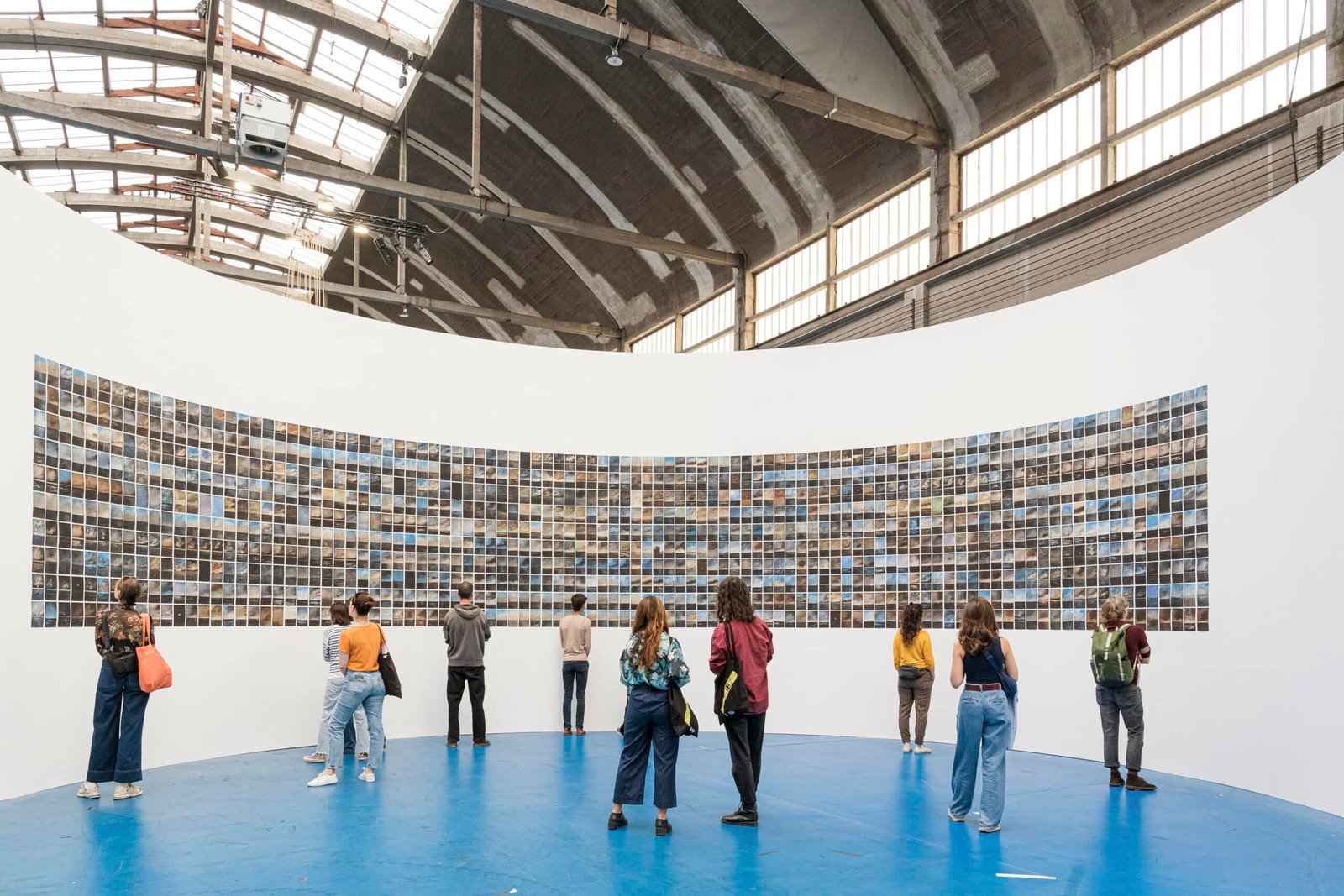
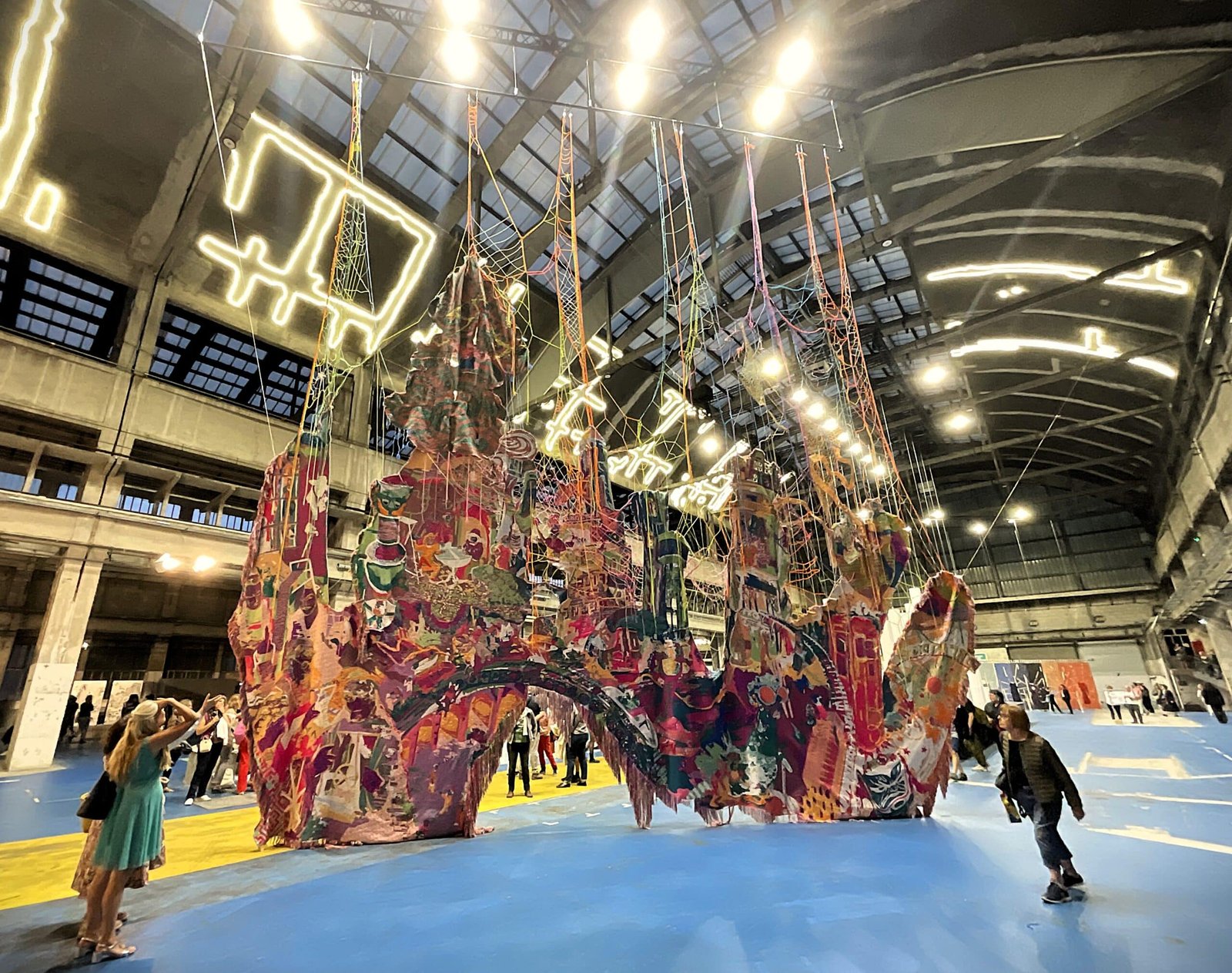
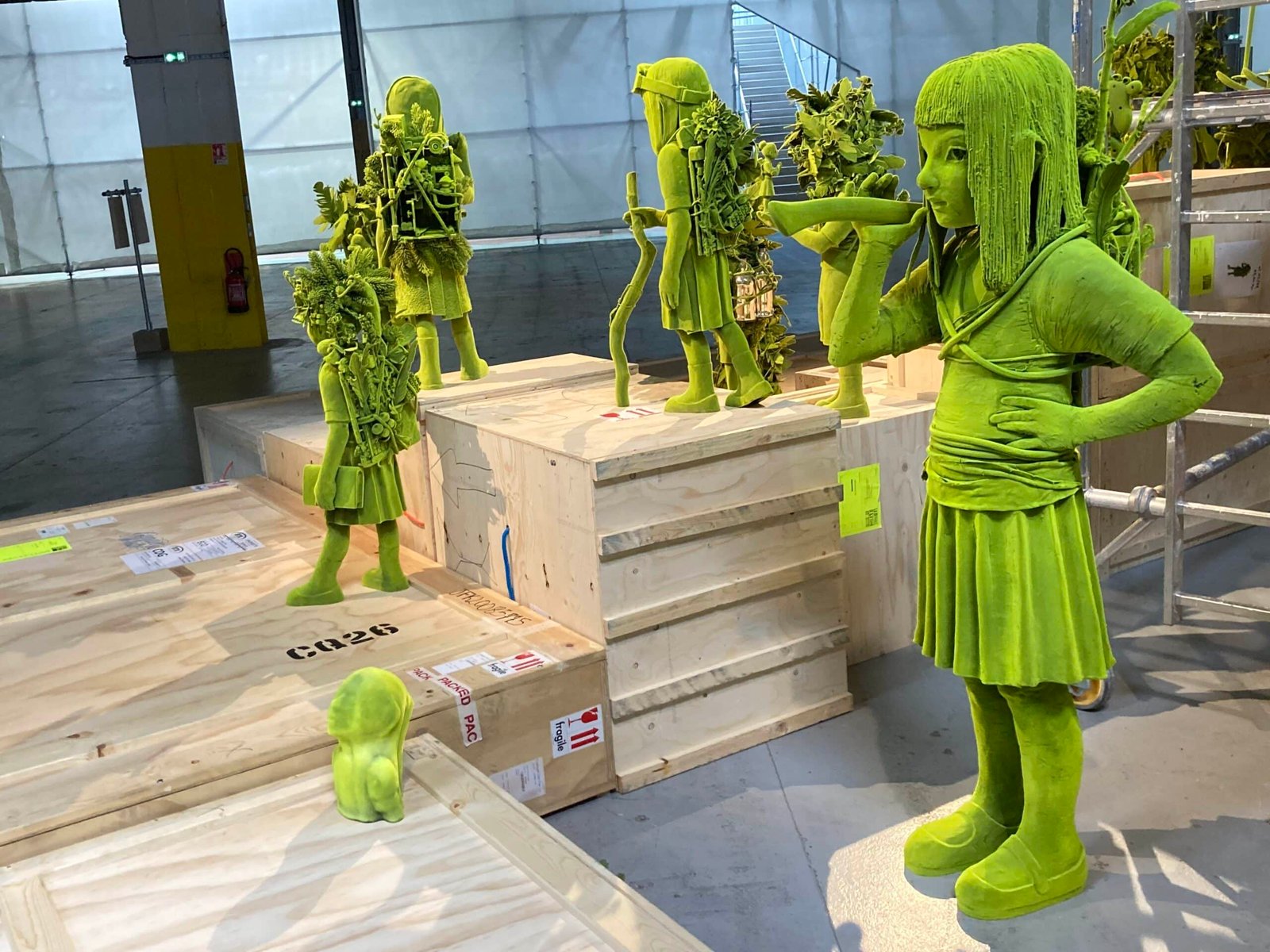
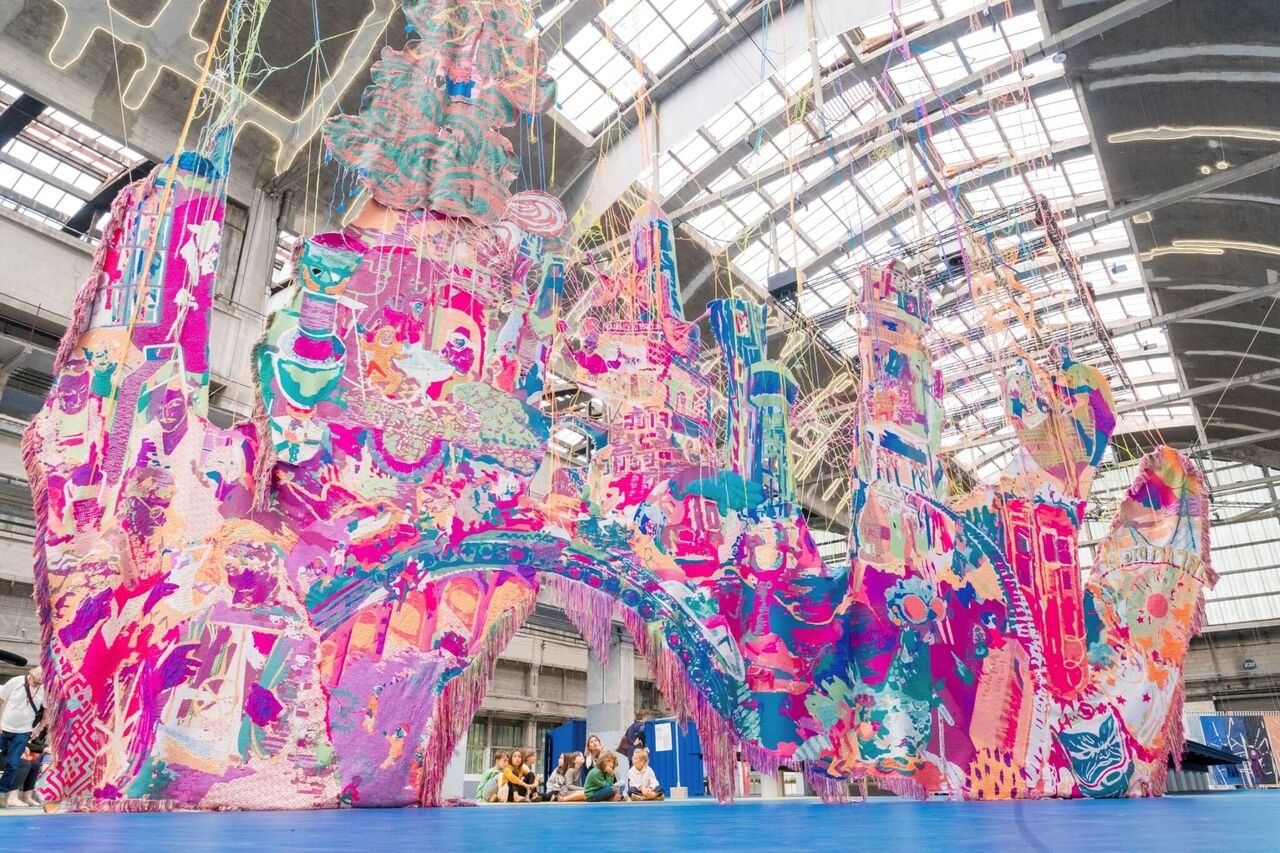
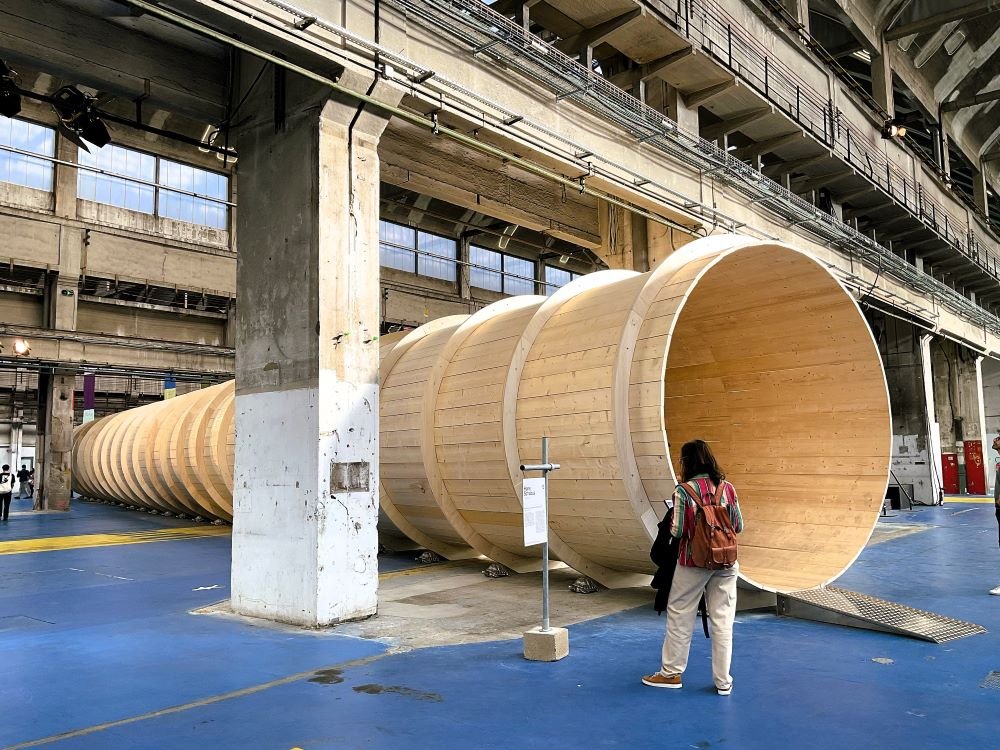
Industrial dimension: Les Grandes Locos connects contemporary works with Lyon’s railway and industrial heritage. The former railway site provides a large-scale environment in which artists can respond to architecture, machinery, labour and transformation.
Relational dimension: The Musée des Tissus et des Arts décoratifs contributes a setting connected with Lyon’s long history of textiles, production, craftsmanship and exchange.
Existential dimension: macLYON provides another perspective on the central curatorial enquiry and presents contemporary artistic practices within a dedicated museum environment.
Urban passages: Lyon’s traboules and other public locations extend the exhibition beyond conventional museum walls, connecting the Biennale with the city’s streets and historic circulation routes.
Talks, workshops & special events
The Biennale’s public programme goes beyond the exhibition itself. Conversations, performances, broadcasts, workshops and participatory activities form part of the wider experience.
“La Fête Permanente” provides informal meeting environments where visitors can encounter conversations, performances, radio and video broadcasts. The project is intended to encourage social interaction rather than treating the artwork as something experienced only through observation.
Educational activities are also available for young visitors. The official programme offers school visits, workshops and mediation activities for children from the final year of kindergarten onward.
The Biennale also participates in Résonance, a wider network of exhibitions and events presented by galleries, cultural organisations and artists throughout the region.
Ticket types
The official 2026 admission structure uses a PASS covering the four paid exhibition venues. The PASS provides one entry to each paid venue.
Current published prices are:
- Full-rate PASS: $28.35
- Reduced-rate PASS: $20.41
- Free PASS: $0
- Audioguide for three venues: $3.40
The reduced rate applies to visitors under 26. Free admission includes visitors under 15, art students and holders of certain qualifying cards, including the Lyon City Card and recognised professional cards.
The dollar amounts are converted from the official published euro prices using an approximate EUR-to-USD rate and are provided here as USD equivalents. The official ticketing page should be checked for the exact amount charged at the time of purchase.
VIP & collector access
The Biennale does not publish a conventional VIP or collector package comparable with a commercial art fair. Instead, professional access is organised through accreditation.
Contemporary art professionals can apply for accreditation, covering fields such as artistic direction, curation, collecting, restoration, administration, production, mediation, art research, communications and other professional activities within the contemporary art sector.
Professional accreditation provides access to the preview period, the opening and the first public-opening days. Professional visitors can also obtain access through the professional ticket rate outside the preview period, subject to proof of professional status.
Event rules
Visitors should follow the individual rules of the Biennale’s participating venues. Because the exhibition occupies museums, historic buildings, public spaces and other locations, access conditions can differ between sites.
Visitors should:
- Follow venue staff instructions.
- Respect museum and heritage-site regulations.
- Observe photography restrictions where applicable.
- Avoid touching artworks unless an installation specifically invites interaction.
- Follow capacity and access instructions.
- Check whether a workshop or guided activity requires advance booking.
- Keep public and exhibition areas accessible to other visitors.
The Biennale’s multi-site format also means that visitors should check the official programme before travelling between venues.
How to get there
Lyon is a major transport hub in southeastern France and can be reached by high-speed rail, regional trains, local public transport and road connections.
Part-Dieu is particularly useful for visitors arriving by train because the station connects directly with Lyon’s wider public transport network. The Biennale itself uses the Gare Part-Dieu area as one of its artistic locations, making the transport hub part of the exhibition experience.
Visitors can then use Lyon’s TCL network to move between exhibition sites. Depending on the venue, metro, tram, bus, walking and cycling can all be useful options.
Public transport & parking
The Biennale is well suited to public transport because its venues are distributed throughout Lyon and Villeurbanne.
The TCL network provides metro, tram and bus connections across the metropolitan area. Gare Part-Dieu is one of the city’s principal public transport interchanges and connects visitors with other parts of Lyon.
Cycling is another practical option for moving between venues. Lyon operates the Vélo’v public bicycle system, while numerous routes throughout the city support cycling.
For visitors arriving by car, parking options depend on the specific venue. The Biennale itself incorporates the LPA Saint-Antoine parking location into its programme, while other areas around major cultural institutions have nearby car parks.
Accommodation areas
Central Lyon is a convenient base for visitors who want to combine several Biennale locations with the city’s museums, restaurants and historic districts.
Presqu’île is particularly useful for access to central venues, while Vieux Lyon provides accommodation close to the historic centre and the traboules. Part-Dieu is practical for visitors arriving by train and using public transport extensively.
Visitors interested in Les Grandes Locos may also consider accommodation in areas south of central Lyon or around La Mulatière and the Confluence area, depending on their planned exhibition route.
Food & refreshments
Lyon is one of France’s major gastronomic destinations, giving Biennale visitors a wide choice of restaurants, cafés, bakeries and traditional food establishments.
The exhibition experience can also incorporate food into the cultural programme. The official Biennale website promotes a PASS & BRUNCH experience associated with Les Grandes Locos, combining exhibition access with a brunch option.
Visitors exploring the city can look for traditional Lyonnaise cuisine, including quenelles, salade lyonnaise, pâté en croûte and regional cheeses. The city’s traditional bouchons provide another way to experience local culinary culture.
Accessibility
The Biennale provides dedicated accessibility information and offers free PASS admission for people with disabilities who hold the relevant Mobility Inclusion Card.
The organisation also provides a simplified FALC information booklet covering practical visitor information, access, tickets and accessibility.
For a more comfortable visit, mobile fatigue-relief chairs called “Flâneuses” are available at Les Grandes Locos and the Musée des Tissus. The service is free without advance reservation, subject to identification requirements and availability.
Because the exhibition occupies multiple buildings with different architectural characteristics, visitors with specific mobility or sensory requirements should check the accessibility information for each venue before planning their route.
Must-see exhibitions
Les Grandes Locos: This former railway site is one of the defining locations of the Biennale and provides an industrial architectural environment for contemporary art.
macLYON: The Museum of Contemporary Art presents works within Renzo Piano’s architectural setting at the Cité Internationale and forms one of the principal paid exhibition venues.
Musée des Tissus: Its connection with Lyon’s textile history makes it particularly relevant to the Biennale’s wider examination of production, relationships and circulation.
Traboules: The historic passageways of Lyon provide an important conceptual connection with the Biennale’s central idea of moving between spaces, perspectives and experiences.
Jardin du Musée des Beaux-Arts: This historic garden provides an outdoor setting for contemporary interventions, including works by Luz Broto, Gideon Horváth and Susan Philipsz.
Fondation Bullukian: The foundation presents Kirtika Kain within the Biennale programme and offers a free-access experience in central Lyon.
Cour des Loges: The historic Renaissance setting hosts Mikhail Karikis’s participatory work “We Are Together Because…”, involving young people from Lyon and other communities.
Previous year’s highlights
The previous contemporary-art edition attracted 285,000 visits, according to the Biennale de Lyon’s official retrospective information. The organisation described the edition as an important public success, reflecting the scale of the Biennale’s audience.
The previous edition also continued the Biennale’s multi-venue approach, connecting major cultural institutions with temporary exhibition locations and public spaces.
The Lyon Biennale alternates its contemporary-art and dance editions within its wider biennial programme. Its contemporary-art exhibitions have developed an international reputation for commissioning artists and presenting contemporary practices in dialogue with Lyon’s cultural and architectural environment.
The new edition continues that approach by combining international contemporary art with Lyon’s industrial, commercial, textile and urban histories.
Official tickets
The official Biennale website is the authoritative source for admission, reservations, opening information and programme updates. The current ticket structure provides a PASS for the four paid exhibition venues, while several other installations and venues offer free access.
Visitors should use the official ticketing system rather than relying on third-party ticket sellers, particularly because some activities require separate reservations.
Official Biennale de Lyon website and tickets (https://www.labiennaledelyon.com/)
For general enquiries, the official contact details supplied for the event are +33 4 27 46 65 60 and info@labiennaledelyon.com.
Tickets Sell Out
in Minutes
Maps
Contact
Video
FAQ's
What is Biennale d'art contemporain 2026 in Lyon?
The 18th Lyon Biennale of Contemporary Art is an international contemporary-art exhibition curated by Catherine Nichols and directed artistically by Isabelle Bertolotti. Its central project explores economy, exchange, relationships, imagination and collective life through contemporary artworks and different locations across Lyon.
Where is the Lyon Biennale held?
The exhibition is distributed across several venues rather than being confined to one exhibition centre. Major locations include Les Grandes Locos, macLYON, Musée des Tissus, IAC, historic traboules, the Musée des Beaux-Arts garden, Fondation Bullukian and other urban sites.
Who are some of the artists exhibiting?
The official artist programme includes international artists such as Lara Almarcegui, Joël Andrianomearisoa, Serwah Attafuah, Béatrice Balcou, Robert Filliou, Mikhail Karikis, Kirtika Kain, Susan Philipsz, Laure Prouvost and Luke Willis Thompson. The programme also includes a dedicated international young-creation project.
Is the Lyon Biennale suitable for families and young visitors?
Yes. The Biennale provides educational visits, workshops and mediation activities for children and young people, with programmes beginning from the final year of kindergarten. Several venues and public installations also provide ways to experience contemporary art outside a traditional museum environment.
Can visitors explore the Biennale using public transport?
Yes. Lyon's TCL network provides metro, tram and bus connections between many of the exhibition locations, while Part-Dieu is an important transport interchange. Visitors can also use cycling and walking routes to connect venues, making it practical to create a multi-site itinerary.