Festival du Film d’Environnement FReDD 2026 – Toulouse, France
What to expect in 2026
Festival du Film d’Environnement FReDD returns to Toulouse and locations across Occitanie with a programme dedicated to cinema, ecology, climate issues, biodiversity, science and the relationship between people and the living world. Organised as the International Environmental Film Festival, FReDD combines film screenings with debates, meetings, exhibitions, educational activities and professional discussions.
The festival is an annual event and has developed a programme intended for different audiences, from cinema enthusiasts and environmental professionals to families, students, school groups and members of the general public. The official festival description says its programme includes more than forty documentary or fiction films, in both short and feature formats, presented in cinemas and cultural partner venues in Toulouse and throughout the region.
The 2026 edition is particularly broad in its film competition structure. The official call for entries identifies five award categories: Grand Prize, One Hour Film Award, Science Film Award, Short Film Award and Public Award. A selection of short films for younger audiences is also planned as part of the festival’s educational and family activities.
Enjoy Your Event Stress-Free with France Travelo
Planning a trip around a festival, concert, cultural celebration, or business event in France can be time-consuming—finding tickets, accommodation, transport, and local information takes effort. FranceTravelo makes it easier by bringing the essential information and travel support together in one place.
Visitors can expect films dealing with subjects such as climate change, biodiversity, agriculture, water, oceans, forests, pollution, environmental justice, urban development and changing relationships between humans and nature. The programme also connects cinema with scientific knowledge and public discussion, allowing audiences to continue conversations after screenings.
Festival dates
The Festival du Film d’Environnement FReDD 2026 takes place from 12–20 November 2026 in Toulouse, France, with additional participating venues and partner locations across Occitanie. The official FReDD website confirms these dates for the 16th edition.
The festival’s programme is distributed across cinemas, cultural institutions, educational establishments and partner venues. Because individual screenings and events can have different admission arrangements, visitors should consult the official FReDD agenda before attending a particular session.
Visiting this event? Don’t miss out on these amazing activities and local experiences while you’re here.
Venues & festival locations
Toulouse is the principal festival hub, with screenings and activities spread across numerous cultural and cinema venues. The official practical-information page lists a substantial network of locations in Toulouse and throughout the region.
Important Toulouse venues include:
- Cinéma ABC – 13 Rue Saint-Bernard, a central cinema and an important festival location.
- American Cosmograph – 24 Rue Montardy, another central Toulouse cinema.
- Cinéma Le Cratère – 95 Grand Rue Saint-Michel.
- Cinéma Véo Cartoucherie – 6 Place de la Charte des Libertés Communales.
- Centre Culturel Bellegarde – a venue for cultural activities and exhibitions.
- Centre Culturel – Théâtre des Mazades – used for screenings, educational activities and festival events.
- Hôtel d’Assézat – a historic venue used for festival-related discussions and cultural programming.
- Hôtel de Région – a location for public events and festival discussions.
- Maison des Associations – used for exhibitions and other activities.
- Médiathèque José Cabanis and other Toulouse libraries – part of the festival’s wider cultural network.
- Metronum – a major cultural venue in the northern part of Toulouse.
- Pavillon République, Conseil Départemental – used for public discussions and professional activities.
- Quai des Savoirs – a science and culture venue involved in educational and public-interest activities.
- Salle du Sénéchal – a central venue used for screenings and radio-related activities.
- Université Jean Jaurès – La Fabrique – another participating cultural and educational location.
FReDD also works with cinemas and cultural venues outside Toulouse. The official venue list includes participating locations in cities and towns such as Albi, Blagnac, Carcassonne, Castres, Colomiers, Foix, Montauban, Narbonne, Nîmes, Perpignan, Rodez, Saint-Gaudens and other communities throughout the region.
Full programme
The 2026 programme brings together competitive films, public screenings, educational sessions, discussions and cultural activities.
The principal competitive structure includes:
- Grand Prize – feature-length and significant environmental films selected for the principal competition.
- Films Une Heure – films built around the one-hour format.
- Films de Science – works connecting cinema with scientific and environmental questions.
- Short Film Award – a competition dedicated to short-form filmmaking.
- Panorama – Public Award – a selection involving audience participation.
- Young Audience Programme – environmentally themed films selected for children and families.
- Out-of-competition screenings – additional films that complement the main competitive programme.
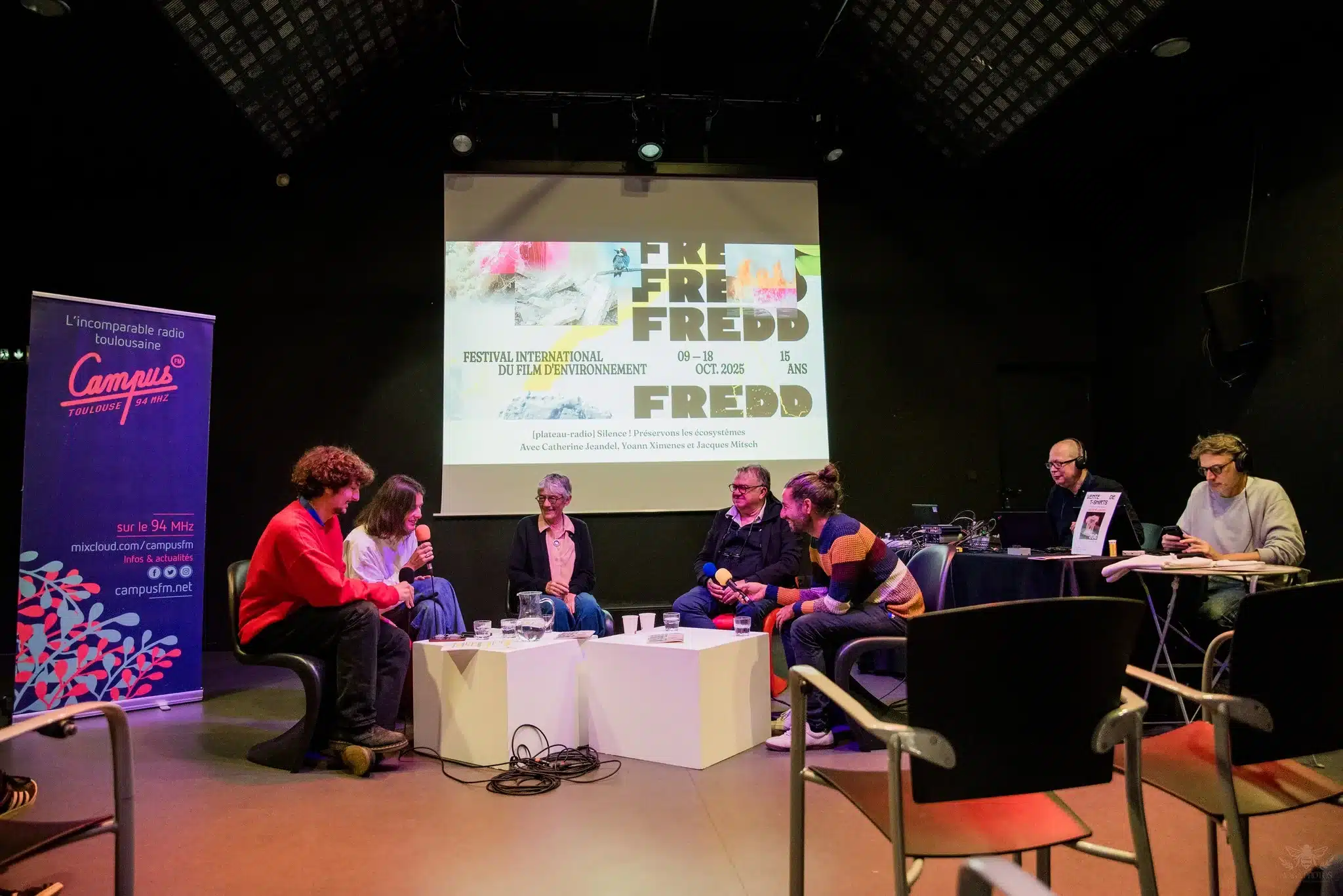
The programme extends beyond conventional cinema. FReDD also presents debates, meetings, radio activities, exhibitions, workshops and educational initiatives. This makes the festival suitable for visitors who want to engage with environmental subjects through several different forms of cultural programming.
Featured films & premieres
The 2026 selection includes a substantial range of documentary, fiction, animation and science-oriented films.
Among the officially published films are L’Ecologie des Sentiments by Alexandre Steiger and Le Corset by Louis Clichy, both included in the Grand Prize selection. The published Grand Prize selection also demonstrates the festival’s willingness to combine fiction with films examining environmental and social relationships.
The Panorama and broader programme include films such as Animus Femina by Éliane de Latour, which was selected through the festival’s citizen-selection process. The film explores relationships between humans and wild animals through the experiences of four women connected to wildlife.
Other films listed by the official programme include:
- La Rivière by Dominique Marchais
- Alliances terrestres by Isabelle Haelvoet
- Cultiver la pluie by Marc Khanne
- Homo animalis, une drôle d’espèce by Jacques Mitsch
- La disparition des lucioles by Vincent Marie
- Glaciers d’Arctique, état des lieux by Pierre Dugowson
- Soulèvements by Thomas Lacoste
- Shein, enquête sur le géant de la fast fashion by Nathalie Gros
- Anthropocène, l’implacable enquête by Cédric Defert
- Planètes by Momoko Seto
- Amour apocalypse by Anne Émond
- Le temps by François Delisle
- Les Voyages de Tereza by Gabriel Mascaro.
The official programme also includes films aimed at younger viewers, using animation and short-form storytelling to introduce environmental subjects in an accessible way.
Directors, actors & guests
FReDD places considerable emphasis on encounters between audiences and filmmakers, researchers, environmental specialists and other contributors. The festival’s format allows selected films to become starting points for discussions rather than simply standalone screenings.
The published programme and jury information identifies filmmakers and environmental specialists connected with the competition, including Éliane de Latour, Alexandre Steiger, Louis Clichy, Dominique Marchais, Thomas Lacoste, Jacques Mitsch, Vincent Marie and other directors represented in the selection.
The festival also works with professional and scientific partners. Its jury structure brings together people from cinema, audiovisual production, design, science, environmental organisations and cultural institutions. This interdisciplinary approach is an important part of the FReDD identity.
Screening schedule
The official FReDD agenda provides the most reliable way to follow the screening schedule because the festival operates across a large network of venues. Sessions are distributed between cinemas, cultural centres, universities, libraries and partner institutions.
A typical festival visit may include:
- Morning screenings for educational or general audiences.
- Afternoon cinema sessions and young-audience activities.
- Evening feature screenings.
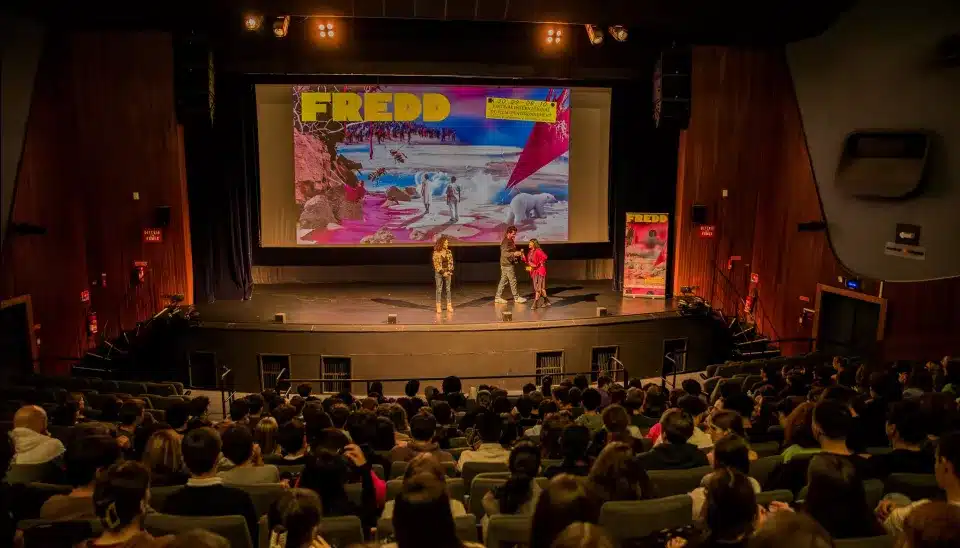
- Post-screening discussions and filmmaker meetings.
- Environmental debates and scientific presentations.
- Radio programmes and public conversations.
- Special cultural events and exhibitions.
Because different venues have separate seating arrangements and admission systems, visitors should check the official FReDD agenda for the individual film, venue and session they want to attend.
Ticket types & accreditation
FReDD does not operate with one universal festival ticket price for every venue. The official festival information states that prices for cinema screenings are generally determined by the participating partner cinemas, while a significant number of activities in public cultural venues are offered free of charge.
For the 2026 edition, visitors should therefore check the official programme or the individual venue before purchasing a ticket. Some cultural activities, discussions, exhibitions and public events are listed as free, while cinema sessions may follow the normal pricing structure of the host cinema.
No single festival-wide 2026 price covering every screening has been published by FReDD, so a specific dollar price should not be assumed where the official programme does not provide one.
Industry & professional access
FReDD has a strong professional and educational dimension in addition to its public cinema programme. The festival brings together filmmakers, audiovisual professionals, scientists, environmental organisations and cultural partners.
Professional discussions can focus on subjects such as environmentally responsible filmmaking and the ecological transition of the audiovisual sector. FReDD has also worked with organisations including Ecoprod, the CNC, DRAC and Audiens around discussions concerning eco-production.
The festival’s environmental approach extends to its own organisation. FReDD states that it is working to align the way the cultural event is produced with the ecological principles promoted through its programme and has obtained the regional Événements Détonnants Level 1 label.
Red carpet & special events
FReDD is primarily an environmental and documentary-oriented film festival rather than a conventional celebrity-focused red-carpet event. Its special events instead emphasise film premieres, opening activities, filmmaker encounters, debates, exhibitions and cultural discussions.
The opening is an important moment in the festival programme, while special presentations can connect a film with its director, scientific contributors or other guests. The festival’s wider events programme also includes exhibitions and interdisciplinary projects that bring together cinema, art, science and ecological themes.
Visitors interested in the broader festival atmosphere should therefore look beyond the main competition and consider the exhibitions, discussions, educational events and special presentations listed in the official agenda.
Festival rules
For filmmakers, FReDD publishes formal submission requirements through its official call for films. The competition accepts short and feature-length works connected to ecology, with films submitted through FilmFreeway and evaluated for inclusion in the official programme.
For visitors, individual cinema and cultural venues may have their own admission and house rules. Guests should follow the instructions provided by the host venue regarding seating, entry, photography, recording, accessibility and behaviour.
Visitors should also check the official programme before attending because some activities require advance registration, while others operate on a free-entry basis.
How to get there
Toulouse is the central base for the festival, and many of the principal venues are located within or close to the city centre.
For visitors arriving by train, Toulouse-Matabiau is the city’s main railway station and provides a practical arrival point for accessing central Toulouse. Several festival venues can then be reached by metro, bus, walking or cycling.
The official FReDD venue information provides specific public-transport instructions for individual locations. For example, Cinéma ABC is served by Metro Line B at Jeanne d’Arc, while Le Cratère is close to Saint-Michel–Marcel Langer on Line B.
Visitors travelling to venues outside Toulouse should check the individual venue information before setting out because the festival network extends across many communities in the region.
Public transport & parking
Public transport is particularly useful for moving between central Toulouse venues. The official FReDD access information lists metro, bus and tram connections for many locations.
For example, Cinéma ABC is served by Line B at Jeanne d’Arc, while the Metronum is accessible from Borderouge on Metro Line B and has nearby bus connections. The Metronum also has bicycle facilities and access to the Tisséo Borderouge car park.
Parking arrangements vary by venue. Some locations have nearby public parking, while other sites recommend using public transport, cycling, car-sharing or carpooling. The festival itself promotes lower-impact travel as part of its environmental approach.
Accommodation areas
For visitors attending several screenings in Toulouse, staying in or near the city centre can make it easier to reach multiple festival locations.
- Capitole and central Toulouse – useful for visitors wanting easy access to central cinemas, restaurants, cultural attractions and public transport.
- Jeanne d’Arc and Saint-Sernin – convenient for the ABC and other central locations.
- Carmes and Saint-Michel – practical areas for access to venues around southern central Toulouse.
- Saint-Cyprien – a good option for visitors who want access to the Garonne, local markets and central cultural attractions.
- Matabiau and Marengo – convenient for visitors arriving by rail and using Metro Line A.
Because FReDD uses many different venues, there is no single official festival hotel. Choosing accommodation close to a metro station is a practical way to reach several locations without relying on a car.
Food & dining
Toulouse offers a broad selection of restaurants, markets, cafés and traditional South-West French cuisine. The official Toulouse tourism office highlights cassoulet, Toulouse sausage and other regional specialities among the city’s characteristic foods.
Visitors attending daytime screenings can also explore Toulouse’s food markets. Victor Hugo Market is a major covered market with food stalls and restaurants, while the Saint-Cyprien and Carmes markets provide additional opportunities to experience local produce and regional food culture.
Central districts such as Carmes, Saint-Georges, Capitole and Saint-Cyprien offer many dining options, making them convenient choices when planning meals around festival screenings.
Accessibility
Accessibility is an important part of FReDD’s venue planning. The official practical-information page identifies accessibility arrangements for many participating locations. Several Toulouse venues are accessible to people with reduced mobility, while some locations also provide hearing-support equipment.
Cinéma ABC is accessible to people with reduced mobility and has a magnetic loop in one auditorium. The cinema also provides the Twavox system for people who are hard of hearing or visually impaired.
Other participating cultural venues, including Centre Culturel Bellegarde, Maison des Associations and several Toulouse media libraries, provide accessibility facilities. Quai des Savoirs also provides access to Toulouse Connect, a free interpretation platform for deaf or hard-of-hearing visitors.
Visitors with specific accessibility requirements should confirm arrangements directly with the individual venue before attending.
Best screenings to attend
The best screening choices depend on the visitor’s interests because FReDD’s programme covers environmental subjects through documentary, fiction, animation and science-oriented filmmaking.
For major competition films: explore the Grand Prize selection, which includes films such as L’Ecologie des Sentiments and Le Corset.
For environmental science: look for films in the Films de Science category, particularly works dealing with biodiversity, oceans, climate and ecological research.
For documentary cinema: films such as La Rivière, Alliances terrestres, Glaciers d’Arctique, état des lieux and Homo animalis, une drôle d’espèce provide different approaches to environmental and human questions.
For families: the young-audience short-film programme offers accessible animation and storytelling around ecological subjects.
For audience participation: Panorama – Public Award films are particularly relevant because the festival’s citizen-selection process gives audiences a direct role in bringing a film into the competition.
Previous year’s highlights
The previous edition demonstrated the breadth of FReDD’s programming, combining films with debates, exhibitions, concerts, educational projects and professional activities. The festival’s published results included awards across several categories, including the Grand Prize, Films de Science, Public Award and radio-related awards.
The Grand Prize went to Amour apocalypse by Anne Émond, while Soulèvements and Le temps received mentions. The Films de Science award recognised Nos loups by Samer Angelone, and the Public Award recognised Homo animalis, une drôle d’espèce by Jacques Mitsch.
The festival also continued its citizen-jury initiative, which allows residents of Occitanie to participate in the selection of a film for the Panorama – Public Award category.
The previous edition’s environmental approach also included measures relating to reuse of materials, responsible mobility and lower-impact festival organisation. FReDD reported that many invited filmmakers, artists and jury members travelled to Toulouse by train and that the festival encouraged car-sharing and other lower-impact transport solutions.
Official tickets & accreditation
The official FReDD website is the primary source for the latest programme, individual screening information, venue details and ticketing instructions.
Because FReDD works with a large network of partner cinemas and cultural venues, ticket arrangements can differ between locations. Some events are free, while cinema screenings may use the admission system of the participating cinema. The official festival information specifically notes that partner-cinema prices apply to cinema screenings and that FReDD also develops free sessions in public cultural venues.
Visitors should use the official FReDD programme and practical-information pages to identify whether their chosen screening requires a ticket, registration or free admission. Professional participants should also consult the festival’s official information for industry activities and registration requirements.
Official website: https://lefredd.org/
Contact: festival.fredd@gmail.com
Tickets Sell Out
in Minutes
Maps
Contact
Video
FAQ's
What is Festival du Film d'Environnement FReDD?
Festival du Film d'Environnement FReDD is an international environmental film festival based in Toulouse that uses cinema and cultural programming to explore climate change, biodiversity, ecological transition and humanity's relationship with the natural world. Its programme includes documentaries, fiction films, short films, science films, young-audience screenings, debates, exhibitions and professional discussions.
Where does FReDD take place?
The festival is centred on Toulouse but uses a large network of partner cinemas, cultural centres, universities, libraries and other institutions. Officially listed Toulouse venues include Cinéma ABC, American Cosmograph, Le Cratère, Véo Cartoucherie, Centre Culturel Bellegarde, Théâtre des Mazades, Metronum, Quai des Savoirs and several other locations, while partner venues also participate elsewhere in Occitanie.
What types of films are shown at FReDD?
FReDD presents documentary, fiction, animation and science-related films connected to ecological and environmental subjects. The official competition structure includes the Grand Prize, Films Une Heure, Films de Science, Short Film Award and Panorama – Public Award, alongside films selected for younger audiences and additional out-of-competition screenings.
Does FReDD include events besides film screenings?
Yes. The festival's programme extends beyond cinema to filmmaker meetings, debates, exhibitions, educational activities, radio programmes, workshops and professional discussions. FReDD also works with scientific, cultural and audiovisual organisations, creating opportunities to examine environmental issues from artistic, scientific and professional perspectives.
Is FReDD accessible for visitors with disabilities?
Many participating venues provide accessibility facilities, and the official FReDD practical-information page identifies accessibility features for individual locations. These include wheelchair-accessible facilities, hearing-support equipment and, at selected venues, additional services for deaf, hard-of-hearing or visually impaired visitors. Visitors with specific requirements should check the accessibility arrangements of their chosen venue before attending.